


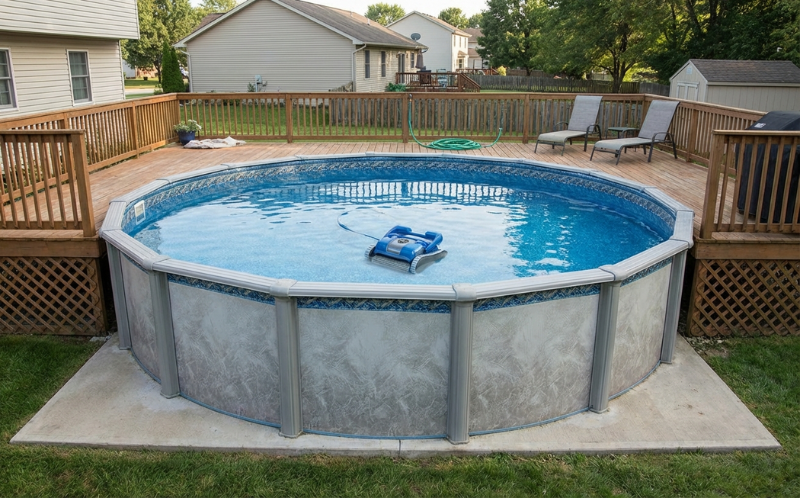
Above ground pool owners often assume their cleaning needs are simpler than those of in-ground pool owners. In some ways, that is true. Many above ground pools are smaller, easier to inspect, and often less expensive to maintain. Still, they are not maintenance-free. Leaves, dust, insects, grass, and fine debris can build up quickly, especially during warm months or periods of frequent use. That is why robotic cleaning becomes a real question for many households. The answer is not the same for everyone. Some owners can manage with a lighter routine. Others may find that robotic support makes pool care far more practical.
Above Ground Pools May Be Simpler, but They Still Get Dirty Fast
Before deciding whether robotic cleaning is necessary, it helps to understand what above ground pool maintenance really looks like in daily use.
Smaller size does not mean low maintenance
Many people think a smaller pool should always be easy to clean. That sounds logical, but it is only partly true. A smaller pool has less area to cover, yet debris can still collect fast. In fact, a compact pool can sometimes look dirty sooner because even a small amount of visible mess stands out more clearly.
This is especially true when the pool sits near grass, trees, or open yard space. Wind can carry dust and leaves into the water. Children and pets can bring in dirt from the ground. Even a short period of neglect can make the pool feel less inviting.
Above ground pools often see casual, frequent use
Above ground pools are often used in a relaxed and informal way. Families may jump in for a short swim after work, children may use the pool several days in a row, and guests may use it on weekends without much planning. That kind of frequent use adds small debris over time.
Because the pool is used casually, owners also tend to want a casual maintenance routine. They usually do not want to spend a large amount of time cleaning before each use. That is one reason robotic cleaning becomes worth considering.
The Real Question Is Not “Do They Need It?” but “What Kind of Routine Do They Need?”
A robotic cleaner is not automatically necessary for every above ground pool. The better question is whether the owner’s current cleaning method matches the pool’s real maintenance demands.
Some owners can manage with simple manual care
If the pool is small, lightly used, and protected from heavy debris, a manual routine may be enough. An owner who skims often, keeps the filter in good condition, and handles floor debris early may not feel much pressure to upgrade. In these cases, robotic cleaning may feel more like a convenience than a need.
That does not mean the tool has no value. It only means the pool may already be manageable with a simple habit-based routine.
Other owners face more buildup than expected
Some above ground pool owners start with a manual approach and then realize the pool gets dirty faster than expected. This often happens in backyards with trees, active children, pets, or regular wind. The owner may find that floor debris returns every few days, or that the pool needs more attention than fits into the week easily.
In that situation, robotic cleaning stops being a luxury question and becomes a practical one.
Robotic Cleaning Can Be Especially Helpful for Consistency
One of the biggest advantages of robotic support is not only cleaning ability. It is the consistency it can bring to the routine.
Small pools still benefit from regular debris removal
A pool does not have to be large to benefit from more regular cleaning. Fine dirt and leaves are easier to remove before they spread or settle into repeated trouble spots. When cleaning happens more steadily, the pool usually stays closer to ready for use.
That matters because many above ground pool owners want the pool available on ordinary days. They do not want to notice the mess first and then begin cleaning from scratch.
Consistency often matters more than deep cleaning
A large manual cleaning session may make the pool look good for a day, but that does not always create an easy long-term routine. Repeated light cleaning often works better than waiting for visible buildup. This is where an above ground robotic pool cleaner can fit naturally into the care pattern. It supports the kind of steady upkeep that keeps the pool from drifting too far between cleanings.
For many households, that kind of support matters more than occasional heavy effort.
Above Ground Pool Owners Should Think About Their Backyard Conditions
Whether robotic cleaning makes sense often depends less on the pool alone and more on the environment around it.
Trees, grass, and open yard exposure increase the cleaning load
A pool placed under or near trees will collect more leaves and plant matter. A pool next to grass may gather clippings, dirt, and small organic debris. In open yards, dust and wind can become the main issue. These conditions raise the cleaning demand even if the pool itself is not large.
Owners in these environments usually need a more active cleaning routine. Manual care can still work, but it may start to feel repetitive very quickly.
Family activity also affects the decision
A pool used by one or two adults on weekends is different from a pool used by children almost every day. Active family use often means more debris, more water movement, and more cleaning pressure around steps and entry points.
This is why robotic cleaning is often easier to justify in busy households. The value comes from reducing repeated maintenance tasks, not just from cleaning a bigger pool.
Time and Effort Matter Just As Much As Pool Size
Many owners compare cleaning tools by thinking only about pool dimensions. In real life, the more important factor is often how much time the owner wants to spend on maintenance.
A manageable routine is more important than a perfect method
The best cleaning method is not always the strongest one on paper. It is the one the owner can repeat without frustration. A simple routine that happens regularly is usually better than a demanding routine that gets delayed.
Above ground pool owners often want low-pressure maintenance. They want the pool to stay clean enough for normal use without turning every weekend into a cleanup project.
Convenience becomes more valuable over time
One manual cleaning session may not feel like a big deal. But repeated sessions across the season can become tiring. Skimming, brushing, and floor cleaning add up. This is where robotic support can become more appealing after a few months of ownership.
The owner may realize that the issue is not whether manual cleaning is possible. The issue is whether it stays convenient enough to keep doing.
Not Every Above Ground Pool Owner Will Reach the Same Conclusion
There is no single answer that fits every pool, which is why owners should think in terms of fit, not general rules.
For some, robotic cleaning is optional but useful
If the pool is small, lightly used, and easy to keep clean, robotic support may simply make the routine more comfortable. It may not solve a major problem, but it can still reduce effort and improve consistency.
For others, it becomes part of a realistic care plan
If the pool collects debris often, sees frequent family use, or is hard to keep ahead of manually, robotic cleaning may be one of the easiest ways to make pool care more sustainable. In that case, it supports not only cleanliness but also a better ownership experience.
Above Ground Pools May Not Always Need It, but Many Owners Benefit From It
Do above ground pools need robotic cleaning? Not always. Some owners can manage well with a simple manual routine, especially when the pool is lightly used and the environment is clean. But many above ground pool owners underestimate how quickly debris can build up and how repetitive routine maintenance can become.
That is why robotic cleaning is worth serious consideration. It can help create a steadier routine, reduce manual pressure, and keep the pool in better shape with less catch-up work. In the end, the decision depends on how the pool is used, what the backyard is like, and how much effort the owner wants to give to maintenance week after week. For many households, that practical fit is what makes the answer clear.
